The Chef’s First Tool: A Guide to Professional Knife Skills and Safety
Lead Analyst
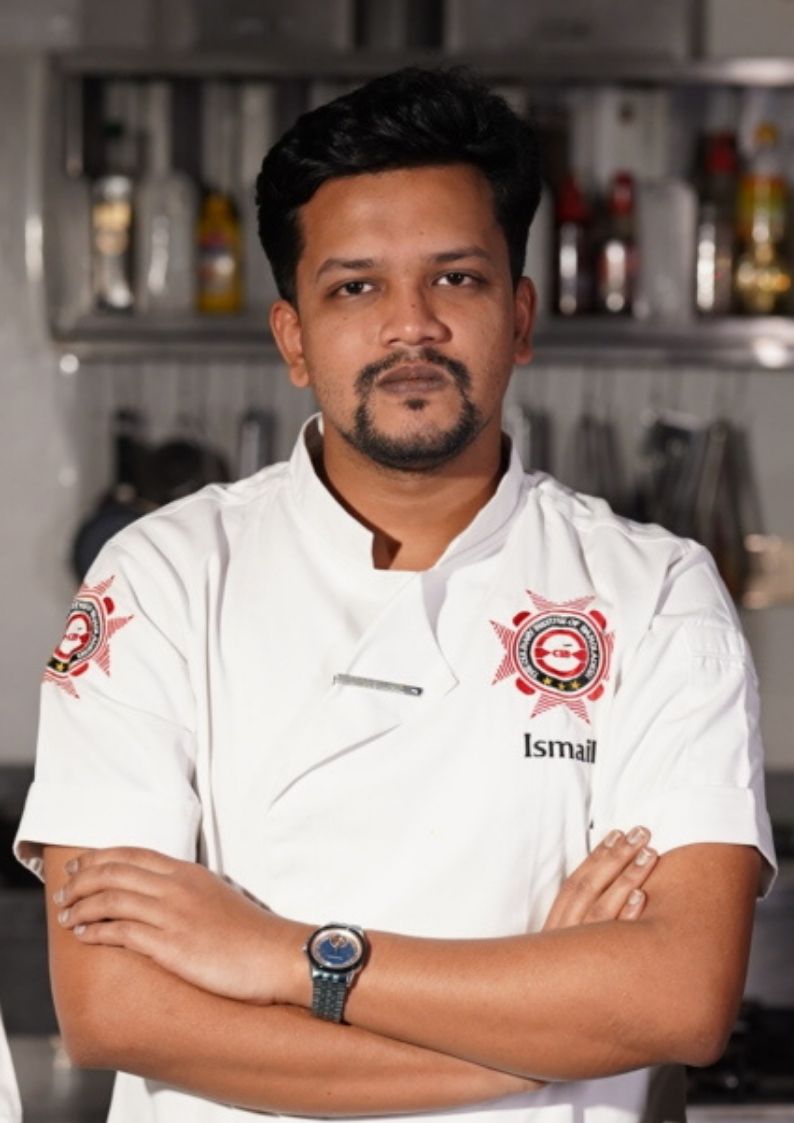
Dewan Ismail


The Chef’s First Tool: A Guide to Professional Knife Skills and Safety
In the hierarchy of a professional kitchen, your knife is your most important tool. It is an extension of your hand and the primary instrument through which you express your craft. In 2026, while automation has touched many parts of the culinary world, professional knife skills remain the non-negotiable foundation of a true chef. Whether you are working in a local bistro or a Michelin-starred restaurant, your ability to execute precise, consistent cuts defines your professional standard.
At the Culinary Institute of Bangladesh (CIB), we believe that speed is a byproduct of accuracy. Our curriculum begins with intensive knife skill drills, ensuring that every student masters the mechanics of safety and precision before they ever turn on a stove.
1. Anatomy of the Chef's Knife and Proper Grip
Before you can master professional knife skills, you must understand your tool. A professional chef's knife is a balanced instrument made of high-carbon steel. Understanding the 'bolster', 'tang', and 'spine' helps you maintain the knife and use it effectively.
The 'Pinch' Grip:
We teach our students the industrial-standard pinch grip. By gripping the blade between your thumb and forefinger just above the bolster, you gain maximum control and reduce wrist fatigue. This is a critical safety measure taught by our Expert Culinary Mentors like Dewan Ismail.
2. The Essential Cuts: From Julienne to Brunoise
Consistency is the soul of professional cooking. If your vegetables are cut into different sizes, they will cook at different rates, ruining the texture and presentation of the dish.
Core Techniques:
- Julienne: Creating matchstick-sized strips (approx. 1/8 x 1/8 x 2 inches).
- Brunoise: The smallest dice, derived from the julienne (1/8 inch cubes).
- Macedoine: A larger cube used for soups and stews (1/4 inch cubes).
- Chiffonade: Fine ribbons of leafy greens or herbs.
Mastering these cuts is a requirement for our Professional Chef Courses and is essential for anyone looking to secure high-paying chef jobs abroad.
3. Safety First: The 'Claw' and the 'Rock'
Knife safety is not just about avoiding cuts; it's about efficiency. The 'Claw' technique involves tucking your fingertips under and using your knuckles to guide the blade. This ensures that the sharp edge is always away from your skin.
In our 2,000 sq. ft. commercial lab, safety is monitored with the same rigor as in a 5-star hotel kitchen. Students must also master the 'Rocking Motion'—keeping the tip of the knife on the cutting board to maintain stability and speed. These protocols align with international ISO-HACCP hygiene and safety standards.
4. Knife Maintenance: Honing vs. Sharpening
A dull knife is a dangerous knife. A professional chef knows the difference between honing (realigning the edge) and sharpening (removing metal to create a new edge). We teach our students how to use a whetstone to maintain their own kit, a skill that is vital for long-term career success.
Professional kits and their maintenance are discussed in detail on our FAQ page. Furthermore, our Certificate Verification System ensures that employers know our graduates have passed rigorous technical trade tests, including advanced knife work.
5. Speed, Accuracy, and the Commercial Kitchen
In a commercial environment, you may be required to process 50kg of onions in a single shift. This is where your training at CIB pays off. By focusing on the 'Mechanics of Motion', we help students build the muscle memory required to work fast without sacrificing the precision of their cuts.
This technical excellence is what allows CIB alumni to command high executive salaries in the industry. Ready to master the blade? Check our Admission page for the next batch start dates.
About the Author
Dewan Ismail is the Principal and Lead Culinary Mentor at the Culinary Institute of Bangladesh (CIB). With over two decades of experience in high-end culinary arts and hospitality management, he has trained thousands of aspiring chefs who now lead kitchens in 5-star hotels globally. He is a certified ISO-HACCP professional and holds advanced credentials from the UK. Under his leadership, CIB has become the nexus of culinary excellence in South Asia.
Learn more about our Expert Culinary Mentors →
Frequently Asked Questions
What is the best type of knife for a beginner chef?
We recommend an 8-inch high-carbon stainless steel Chef's Knife. It is versatile, holds its edge well, and is the workhorse of any professional kitchen.
How can I practice knife skills safely at home?
Always use a stable cutting board (use a damp cloth underneath to prevent sliding) and start with soft vegetables like potatoes or zucchini. Focus on the 'Claw' grip first.
Do I need to buy my own knives for the course at CIB?
CIB provides professional-grade tools for use in our labs, but we highly encourage students to invest in their own professional knife kit for home practice and future employment.
How do I know if my knife is sharp enough?
The 'Paper Test' is a common method: a truly sharp knife should slice through a piece of held paper effortlessly without tearing it.
Are knife skills included in the Basic to Advance course?
Yes. Knife skills and safety are the very first modules covered in our 'Professional Chef Course - Basic to Advance', as they are the foundation for all other culinary techniques.
Quick Answers (PAA)
Voice & Search Engine FAQs
Understanding professional knife skills is crucial for career advancement. It ensures you meet industry standards, allowing you to secure premium positions in 5-star hotels and international markets.
CIB provides intensive, 100% practical training specifically designed around professional knife skills. Our NSDA-accredited curriculum ensures you gain hands-on experience under the guidance of Master Chefs.
Yes. International recruiters in the Gulf and Europe heavily prioritize professional knife skills. Demonstrating competency in this area significantly boosts your chances of passing practical trade tests.
Professionals skilled in professional knife skills can expect starting salaries of 25,000-45,000 BDT locally, and 65,000-95,000 BDT in international 5-star placements. Executive positions pay substantially more.
Frequently Asked Questions (FAQ)
Why is professional knife skills important for culinary professionals?
How can CIB help me master professional knife skills?
Is professional knife skills relevant for jobs abroad?
What is the average salary after learning professional knife skills?
Does professional knife skills training include certification?