
Cloud Kitchen vs Restaurant: Which Food Business is Right for You in Bangladesh?
Lead Analyst
Salman Iqbal

Cloud Kitchen vs Restaurant: Which Food Business is Right for You in Bangladesh?
The culinary market in Bangladesh in 2026 is experiencing a golden age. Rapid urbanization, busy professional schedules, and a massive shift towards home delivery platforms have changed how millions of people consume food. For aspiring culinary entrepreneurs, there has never been a better time to launch a food startup.
However, the most critical decision you will make before spending a single Taka is choosing your operational model. Should you open a traditional dine-in restaurant or leverage the low-cost, digital-first efficiency of a cloud kitchen?
This guide compares cloud kitchen vs restaurant Bangladesh to help you make a highly profitable, strategically sound decision.
What is a Cloud Kitchen?
A cloud kitchen (also known as a ghost kitchen, dark kitchen, or virtual restaurant) is a food production facility engineered exclusively for delivery. There is no physical storefront, no dining tables, and no waitstaff. Your customers find your menu on platforms like Foodpanda, Pathao, or social media, and your food is delivered directly to their doorstep.
What is a Traditional Restaurant?
A traditional restaurant is a physical location centered around customer experience. It features a dining room, styled interior aesthetics, physical menu cards, table service, and physical brand interaction.
Head-to-Head Comparison: Cloud Kitchen vs Restaurant in Dhaka
Let's look at the operational reality in 2026 for a startup in Dhaka (e.g., in Dhanmondi, Banani, or Uttara):
1. Capital Investment (Starting Cost)
- Traditional Restaurant: High. Starting a decent 40-seat dine-in restaurant in Dhaka easily costs 20 to 50 Lakh BDT. This covers prime commercial rental deposits, high-end interior decoration, customer restrooms, air conditioning, and extensive branding.
- Cloud Kitchen: Ultra-Low. You can start a commercial-grade cloud kitchen with just 5 to 10 Lakh BDT. Your location does not need to be on the main road; a first or second-floor space in a residential alley works perfectly, dramatically reducing rental costs and deposit requirements.
2. Operational Overhead (Running Costs)
- Traditional Restaurant: High monthly fixed costs. You must pay prime rent, utility bills for high-power ACs, salaries for front-of-house waiters, cashiers, and cleaning staff.
- Cloud Kitchen: Low. Your primary costs are kitchen staff (cooks and kitchen helpers), gas/electricity, and high-quality packaging materials. Since there is no front-of-house service, your staffing overhead is slashed by 60%.
3. Customer Acquisition & Marketing
- Traditional Restaurant: Organic foot traffic from main-road visibility, augmented by digital local SEO.
- Cloud Kitchen: 100% dependent on digital visibility. You must aggressively market your brand on Facebook and Instagram, and pay listing fees and commission cuts (typically 25% to 30%) to delivery platforms like Foodpanda.
4. Regulatory & Licensing Requirements
Operating a legitimate food business in Dhaka requires multiple regulatory clearances:
- Trade License from the City Corporation.
- TIN & VAT Registration (BIN).
- BFSA (Bangladesh Food Safety Authority) License.
- Fire Safety Certificate.
For a traditional restaurant, securing all of these for a public dine-in space is rigorous and subject to frequent city inspections. For a cloud kitchen, the regulatory path is cleaner as it operates purely as a private food preparation facility, though strict ISO-HACCP hygiene standards must still be met to clear BFSA audits.
Comparison Matrix: 2026 Food Startup Guide
| Feature | Cloud Kitchen Model | Traditional Restaurant Model | | :--- | :--- | :--- | | Average Startup Cost | ৳5,00,000 - ৳10,00,000 | ৳20,00,000 - ৳50,00,000+ | | Ideal Location | Back-alley, 1st/2nd Floor (Low Rent) | Main road, ground floor (Premium Rent) | | Front-of-House Staff | Zero | 3 to 10+ (Waiters, Cashiers, Captains) | | Profit Margins | 15% - 25% (Highly volume-dependent) | 10% - 20% (Heavily eaten by overhead) | | Launch Timeline | 3 to 6 weeks | 3 to 6 months | | Scaling Flexibility | Extremely high (Easy to change menus) | Low (Menu changes require re-branding) |
The Verdict: Which is Right for You?
Launch a Cloud Kitchen If:
- You have a limited startup capital (under 10 Lakh BDT).
- You want to launch rapidly (within 4 weeks) and test different food concepts (e.g., selling burgers today and shifting to healthy salads next week without changing physical signage).
- You want to minimize administrative headaches and focus entirely on food quality, portion control, and digital brand building.
Launch a Traditional Restaurant If:
- You have substantial capital (25+ Lakh BDT) and are prepared for a longer break-even timeline.
- Your food concept is centered around experience, premium presentation, or luxury dining (e.g., fine-dining Italian or live-teppanyaki).
- You want to build a long-term, high-visibility flagship brand that serves as an anchor for franchise scaling.
How CIB Empowers Culinary Entrepreneurs
Whether you choose the cloud kitchen or the dine-in route, culinary skills alone do not guarantee business survival. Most food startups fail due to poor menu engineering and chaotic food costing.
At the Culinary Institute of Bangladesh (CIB), our professional curriculum goes far beyond cooking techniques. We provide extensive training in:
- Food Costing Formulas: Master exact portion calculations to guarantee profitability.
- Menu Engineering: Design menus that highlight high-margin items to boost average order values.
- Commercial Kitchen Management: Learn to design kitchen layouts that maximize speed and reduce waste.
- HACCP Hygiene Standards: Direct operational training to satisfy BFSA inspectors and run a legally compliant kitchen.
Invest in your entrepreneurship. Learn the science of food business before launching your dream kitchen.
Learn more about our Entrepreneurship and Food Costing Modules →
Frequently Asked Questions
What is the commission rate of food delivery platforms in Bangladesh?
In 2026, major food delivery platforms like Foodpanda and Pathao Food charge a commission ranging from 25% to 32% on every order. While this seems high, a cloud kitchen model easily offsets this cost because it does not pay premium main-road rent or front-of-house staffing costs.
Can I run a cloud kitchen from my home apartment?
While many home bakers operate informally, running a commercial-grade cloud kitchen from a residential apartment is not sustainable for high-volume orders. To secure a Trade License and BFSA approval, you generally need a dedicated commercial or semi-commercial space that meets proper fire safety, gas connection, and waste disposal standards.
How does CIB's food costing training help business owners?
CIB teaches the exact mathematical formulas used by 5-star hotels to calculate raw food costs. You will learn to weigh ingredients to the gram, calculate wastage percentages, and set menu prices that guarantee a food cost percentage of 28% to 35%, ensuring your business remains highly profitable.
What is the fire safety requirement for a food business in Dhaka?
All food establishments, including cloud kitchens, must have a Fire License from the Fire Service and Civil Defense. Requirements include installing dry-chemical fire extinguishers, maintaining clear emergency exit routes, and using heavy-duty, commercial gas pipe fittings with safety automatic cut-off valves.
Do I need to hire a 5-star head chef for a cloud kitchen?
No, hiring a highly expensive head chef is usually unnecessary for a lean cloud kitchen. Instead, CIB recommends that the entrepreneur completes our Professional Chef Course to master kitchen operations, and then trains junior kitchen assistants to replicate standard recipes using exact, pre-measured culinary sheets.
Quick Answers (PAA)
Voice & Search Engine FAQs
In 2026, major food delivery platforms like Foodpanda and Pathao Food charge a commission ranging from 25% to 32% on every order. While this seems high, a cloud kitchen model easily offsets this cost because it does not pay premium main-road rent or front-of-house staffing costs.
While many home bakers operate informally, running a commercial-grade cloud kitchen from a residential apartment is not sustainable for high-volume orders. To secure a Trade License and BFSA approval, you generally need a dedicated commercial or semi-commercial space that meets proper fire safety, gas connection, and waste disposal standards.
CIB teaches the exact mathematical formulas used by 5-star hotels to calculate raw food costs. You will learn to weigh ingredients to the gram, calculate wastage percentages, and set menu prices that guarantee a food cost percentage of 28% to 35%, ensuring your business remains highly profitable.
All food establishments, including cloud kitchens, must have a Fire License from the Fire Service and Civil Defense. Requirements include installing dry-chemical fire extinguishers, maintaining clear emergency exit routes, and using heavy-duty, commercial gas pipe fittings with safety automatic cut-off valves.
Frequently Asked Questions (FAQ)
What is the commission rate of food delivery platforms in Bangladesh?
Can I run a cloud kitchen from my home apartment?
How does CIB's food costing training help business owners?
What is the fire safety requirement for a food business in Dhaka?
Do I need to hire a 5-star head chef for a cloud kitchen?
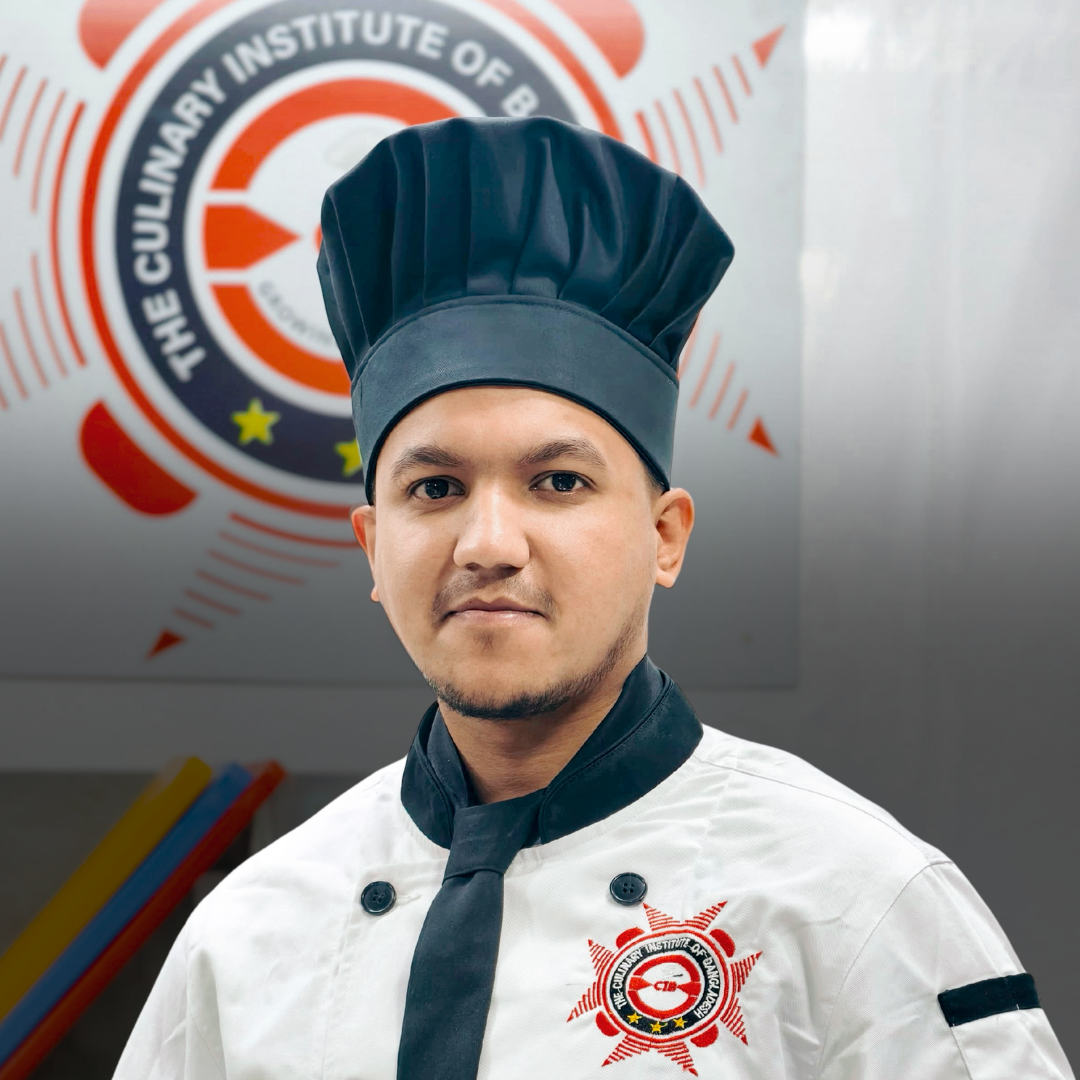
Salman Iqbal
Brand Manager